
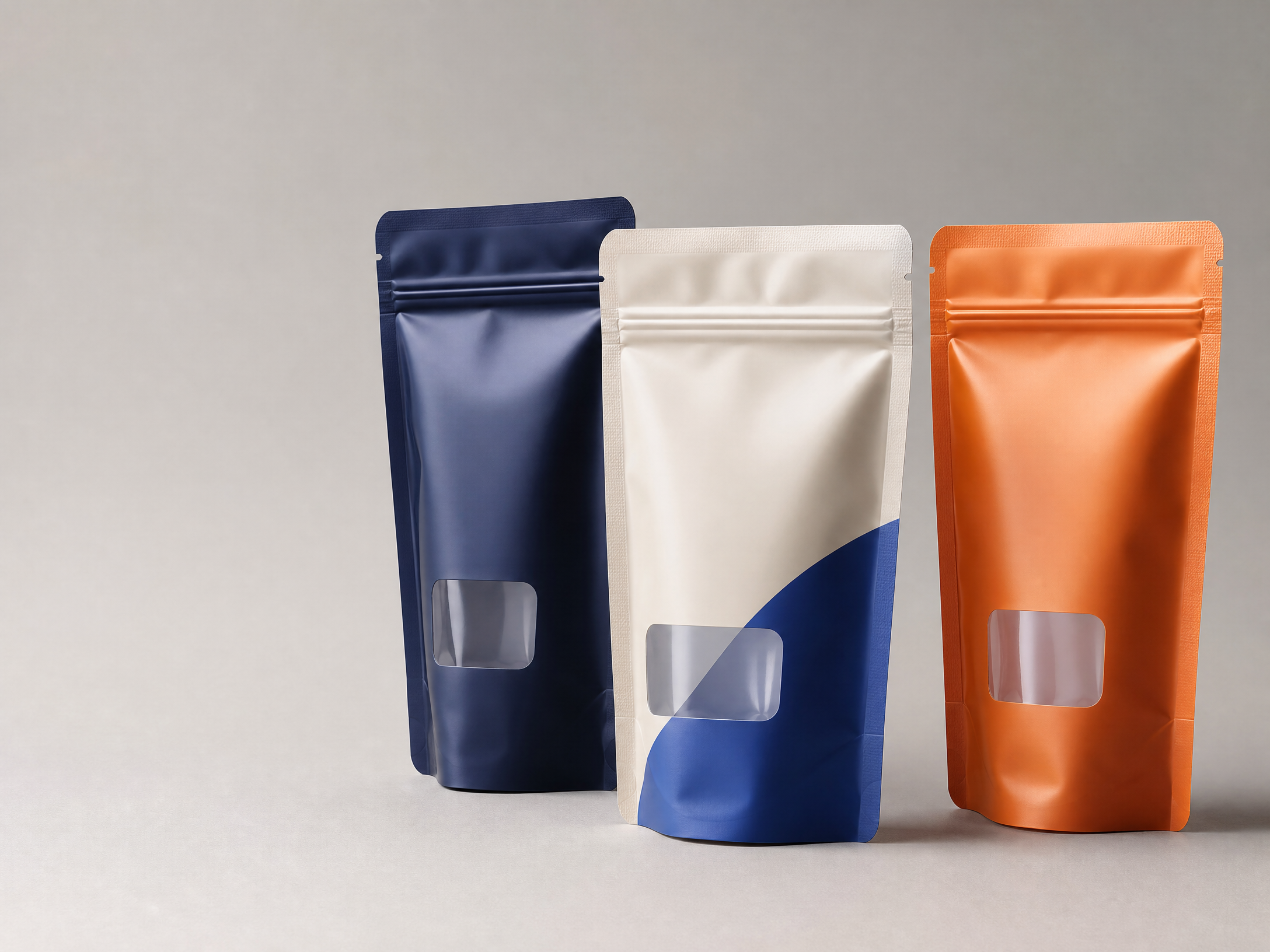
A useful snacks and dry-goods packaging brief does more than list a bag size. It records the product risk, the portion, the barrier target, the filling method and the retail route. That information lets a supplier answer with a relevant format instead of a generic catalogue.
Start with the product and the quality risk

Moisture
Will the product soften, clump or lose crispness?

Oxygen
Will fats, nuts or flavors change during storage?

Light
Does the product need an opaque or barrier layer?

Physical load
Will the pack be crushed, stacked or shipped?
Write the brief in this order
| Brief section | Information to provide |
|---|---|
| Product | Ingredients, form, fat or moisture sensitivity, fill temperature |
| Pack | Fill weight, portion, finished dimensions, opening and closure |
| Shelf life | Target storage period and expected transport conditions |
| Channel | Retail, e-commerce, foodservice, club or subscription |
| Production | Manual or automatic filling, line speed and quantity |
Do not skip the filling method
The same pouch can perform differently when the filling method changes. Confirm the bag opening, product drop height, seal contamination risk and machine speed. For nuts, powder and sticky dried fruit, the fill method often decides the final format.
Plan the retail and repeat-use experience
Decide whether the pack stands on shelf, hangs, ships flat or is opened repeatedly. A zipper, window, hang hole or easy-open feature should follow that use case. Then, place the brand, product information and barcode where they remain clear after packing.
Include artwork and information requirements in the brief
Packaging is also an information system. Decide where the logo, product name, flavor, net weight, ingredients, warnings and barcode will appear. For retail, leave enough unprinted space for a barcode and any required legal panel. For e-commerce, reserve a clean area for labels and returns information.
- Brand hierarchy and the first message a shopper should notice.
- Front and back panel information, including required label content.
- Barcode type and quiet-zone requirements.
- Window, hang hole, tear notch or zipper positions.
- Print colors, finish and the artwork file stage.
Ask these questions before production
Confirm the approved film structure, finished pouch dimensions, print proof, closure type and packing method. Ask how the supplier will pack and protect the bags before shipment, and how the first production run will be checked. A clear brief prevents most late changes because the product, artwork and line requirements are reviewed together.
What makes a packaging brief incomplete?
A brief is incomplete when it gives a bag size but not the product risk, fill method, shelf-life target or sales channel. Those details change the format recommendation.
Can a supplier recommend a format before artwork is ready?
Yes. Structure selection can start with the product and pack requirements. Artwork comes after the format and print layout are confirmed.
Snacks and dry goods brief FAQ
Do I need an oxygen barrier for snacks?
Only when the product and shelf-life target require it. Nuts and fried snacks usually need more protection than simple dry mixes.
Should I choose a stand-up or flat-bottom pouch?
Choose stand-up for efficient retail display. Choose flat bottom when the product needs a wider base and a larger front panel.
Can the bag include a window?
Yes, but the window changes the protected area and print layout. Confirm the product visibility and barrier needs together.
What affects the minimum order?
Size, film, closure, print and tooling all affect the minimum quantity. Trial quantities may be possible for the right format.
Next step
Compare the format options in the Snack & Dry Goods Packaging guide, then send the brief with your target shelf life and fill method.