
Application guide / coffee & tea
Coffee and tea packaging starts with the product, the shelf and how the pack is used.
Use this guide to organise a project brief around the product form, pack size, filling details, shelf presentation and the information a buyer needs to see. It is a planning page—not a promise of materials, performance or compliance.
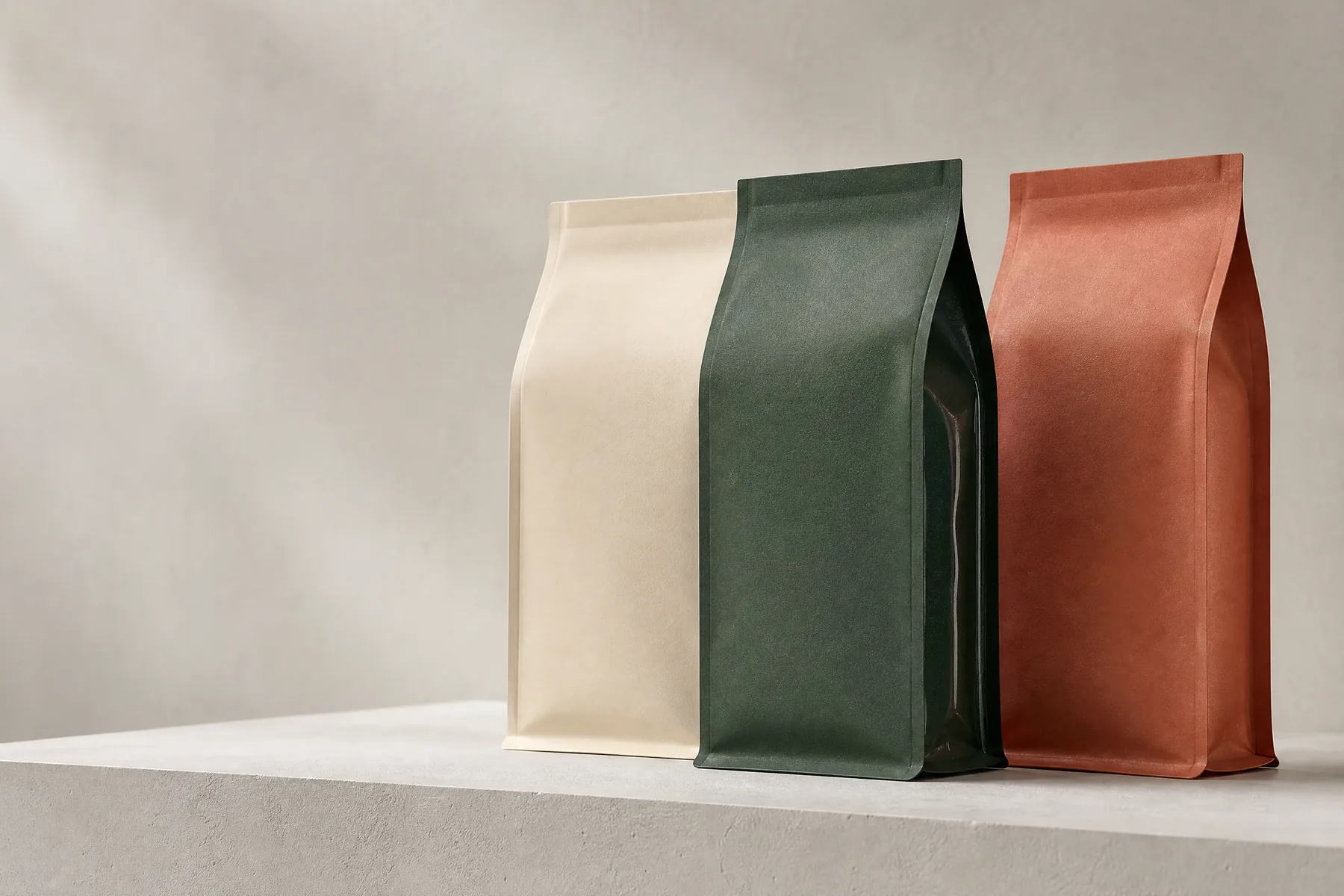
Illustrative pouch formats. Final packaging details are discussed for the individual project.
01 — DEFINE THE PACKING CONTEXT
Start with what the product is and how it reaches the package.
A useful coffee or tea brief distinguishes whole bean, ground, loose-leaf, portioned or sample-format products. It also explains whether the pack will be filled by hand or through an established packaging workflow, how much product is intended for each pack, and whether retail, online sale or a mixed route informs the presentation.
- Product description and whether it is whole bean, ground, loose-leaf, portioned or another format.
- Target pack size direction, product density or a current package reference if available.
- How the package is filled, handled and prepared for sale.
- The market, artwork status and the information shoppers need to read first.
02 — COMPARE THE pouch or bag format
Choose the pouch profile around display, handling and information order.
Different pouch structures create different surfaces for a brand name, product name, roast or product details, and supporting copy. The selection should follow the product, intended fill and customer use rather than a generic recommendation.
Stand-Up Pouches
A familiar upright profile for projects that begin with front-facing presentation, product fill and opening direction. Explore Stand-Up Pouches.
Flat Bottom, Side Gusset and Quad Seal
Structured formats for teams considering a more defined shelf profile or multiple information panels. Compare Flat Bottom, Side Gusset and Quad Seal product pages.
Zipper Pouches
Where repeat use after opening is part of the product conversation, define how the customer will open, use and reclose the pack. Explore Zipper Pouches.
03 — ORGANIZE THE FRONT-OF-PACK STORY
Decide what a shopper should notice in sequence.
A premium package benefits from a deliberate information order. In the first brief, separate the brand identifier, product or blend name, product description and supporting details. This helps the artwork conversation stay connected to the actual panels and profile of the pouch.
- What must be read immediately from a shelf or product image.
- What can appear as secondary information on side, back or lower panels.
- How variants, sizes or product types need to be distinguished across a range.
- Whether the pack needs to work as a retail unit, online visual or both.
PROJECT QUESTIONS
Questions buyers often ask
Which pouch style should I begin with for a coffee project?
Begin with the product form, planned pack size, filling context and the amount of front-facing or multi-panel information you need. From there, compare the relevant format pages rather than assuming one shape fits every product.
Can I discuss a reclosable opening before the pouch details are final?
Yes. Describe how the customer is expected to use the product after the first opening. That gives the project discussion a clear use-case without presuming a particular feature, material or performance level.
What artwork information is useful in a coffee packaging brief?
A logo or current package reference, product and variant names, the target market, intended information order and the artwork stage are useful starting inputs. Press-ready artwork is not required to begin the conversation.
Does this page make food-contact or freshness claims?
No. Product safety, material suitability, compliance and performance requirements must be verified for the actual product, market and process before they are represented as a project outcome.