
Pet Food & Treat Packaging Guide
Protect freshness through the daily feed, not just through the warehouse.
Pet food packaging has to do more than look shelf-ready. It protects dry kibble, treats, fresh or frozen recipes from moisture, oxygen, light and pests, while supporting the way an owner opens, portions and closes the bag every day.
Direct Answer
The best pet food bag keeps oxygen and moisture out and keeps serving practical.
For dry pet food, the critical packaging job is slowing moisture and oxygen exchange after the pack is opened. A resealable closure helps by reducing the air inside, while a high-barrier film or kraft-look laminate can slow product degradation during distribution. Treats usually need the same moisture and aroma control, but with more emphasis on visible product and small pack sizes. Fresh, chilled or raw pet food is a separate technical brief because it may need stronger seal integrity, cold handling and a shorter distribution cycle.
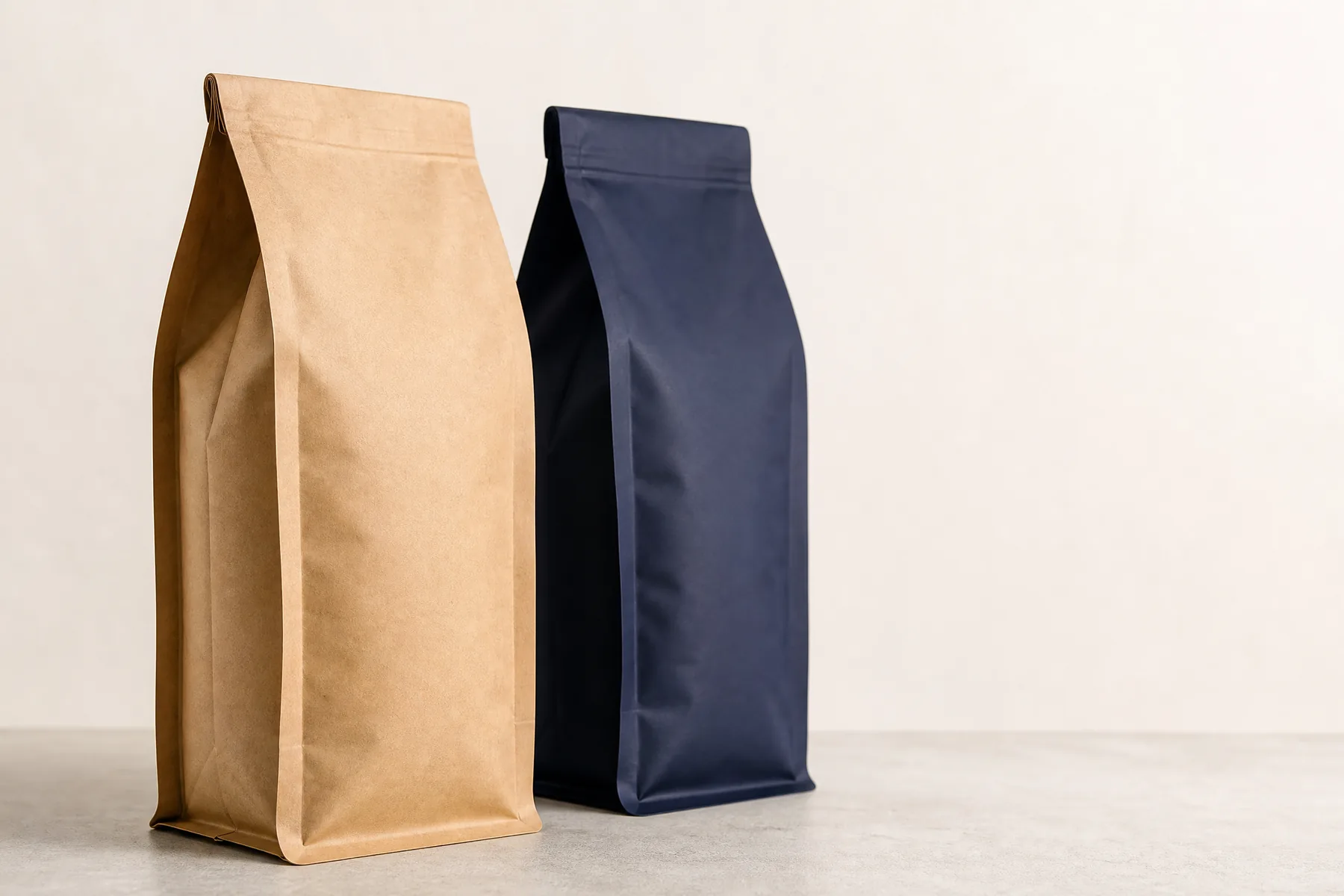
What changes by pack size
- Trial and small-batch: a stand-up pouch with a zipper can suit 500 g to 2 kg formats without a large production commitment.
- Mid-size dry food: side gusset or flat bottom bags give a stable base, generous front panel and more volume per unit of shelf space.
- Treat and single-serve: smaller pouches or header bags make it easier to test recipes, flavors and limited editions.
- Range continuity: using one format language across sizes helps owners recognize the brand at a glance.
Final format, size and film structure are confirmed with your product and filling method during the project review.
Format Comparison
Pet food formats compared by product reality, not by shape.
Use the product form and the owner routine first. The format should follow the daily use: stable display for retail, easy reclose for repeat use, or a compact pouch for online and subscription orders.
| Product reality | Common first route | Why owners and brands ask about it |
|---|---|---|
| Dry kibble or granules | Side gusset bags or stand-up pouches | A stable base and recloseable opening reduce spillage and keep air out between feeds. |
| Soft or crunchy treats | Stand-up pouches, lay flat pouches or header bags | Small pack sizes, visible product and easy sharing fit trial purchases and repeat treats. |
| Fresh, chilled or raw recipes | Laminated pouches or rollstock with a stronger technical brief | The conversation centers on seal integrity, cold handling, barrier and production schedule. |
| Supplements, powders or semi-moist snacks | Flat bottom pouches or small stand-up pouches | Full panels make nutrition facts and feeding instructions easier to place. |
| Subscription and e-commerce refills | Lay flat or rollstock packaging | Lower shipping volume and compact pack format matter more than shelf display. |
This table is a first-stage guide. The final recommendation is confirmed after reviewing product, fill route, market and distribution requirements.
Retail, Online and Small-Batch Routes
Choose a pet food packaging route by where the bag will be sold and used.
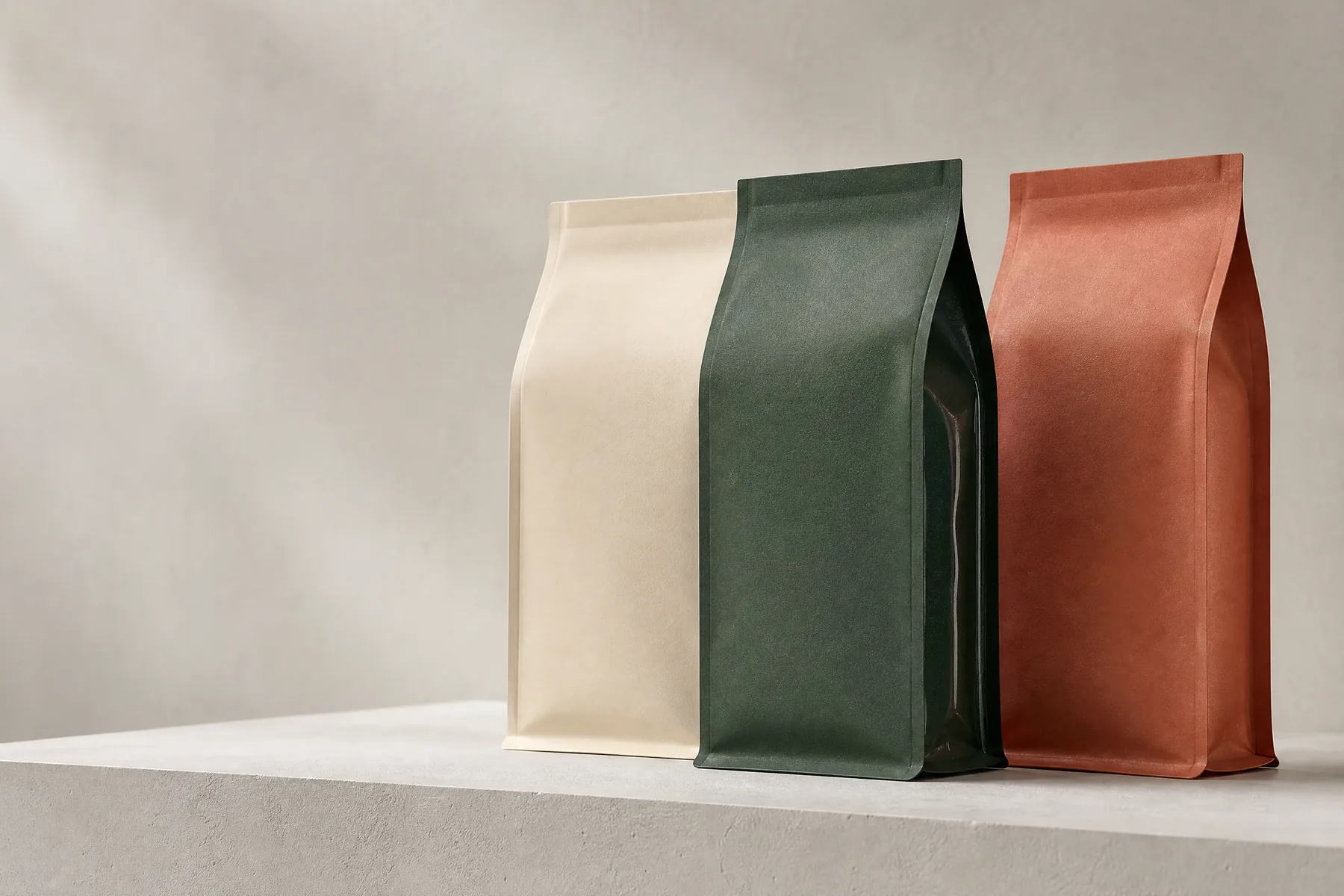
Retail shelf and in-store recognition
A broad front panel helps the product name, protein, feeding guide and brand story stay readable. Flat bottom and side gusset bags are common starting points for larger format pet food because they stand without support and create more visual area.
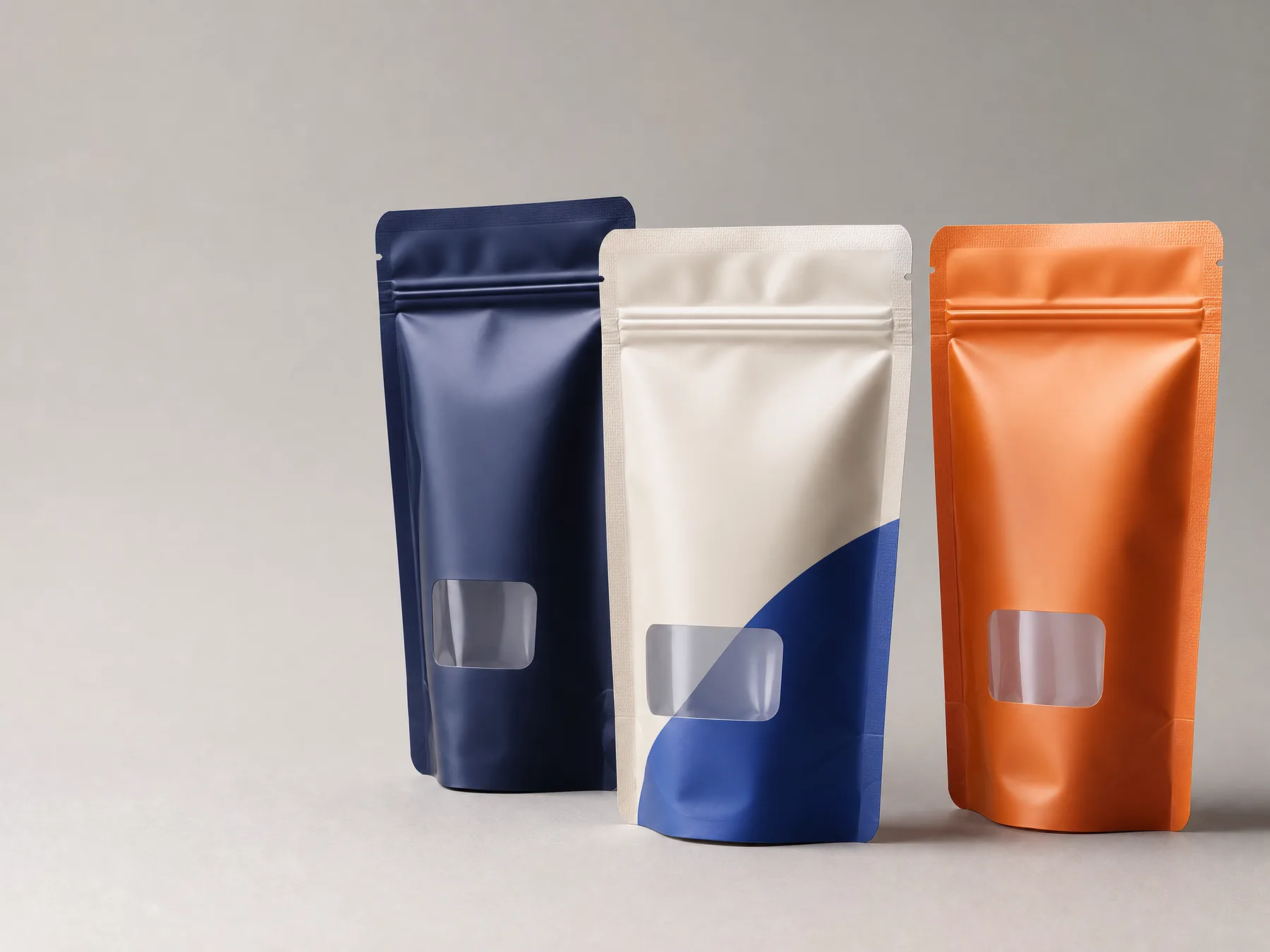
E-commerce, sample and small-batch formats
A stand-up pouch can keep shipping cost and MOQ practical for smaller batches, subscription launches and flavor tests. A resealable zipper matters when the same bag will be opened many times.
Range expansion and repeat orders
When the range grows, consistent print positions, closure types and structure help suppliers keep quality repeatable across recipes, proteins and pack sizes. That is the moment to ask about artwork structure, material stocks and minimum quantities.
What Pet Owners Ask
Questions about opened bags, storage and freshness
How long does opened dry pet food stay fresh in its bag?
The practical answer depends on the recipe, storage conditions and the manufacturer’s guidance. For most opened dry food, the priorities are the same: press out air, close the bag fully, keep it away from heat and humidity, and use the food within the window printed or recommended by the brand. Packaging cannot stop every change once oxygen and moisture enter, but a high-barrier structure and resealable opening help reduce that daily exposure.
Should kibble stay in the original bag or move into a container?
Most owners and veterinarians recommend keeping the original packaging when possible because it preserves the product information, batch and use-by details. If an airtight container is preferred for space, the cleanest approach is usually to place the whole sealed bag inside the container, not to tip loose kibble into an unlined bin where oil and residues can build up.
Why can pet food odor escape through the package?
Aroma can pass through a package when the film structure has low barrier performance, when heat seals are incomplete, or when the bag is repeatedly left open. Brands that need stronger odor and oxygen control often compare metallized, foil or high-barrier EVOH structures. The right choice is validated through material testing with the actual recipe.
Are resealable pet food bags worth the extra cost?
For bags used over several weeks, resealability is usually worth discussing because it affects how the owner closes the pack after every meal. A press-to-close zipper is common on stand-up and flat pouches; the final closure should be tested for strength, repeated opening and compatibility with the filling line.
What does food-grade or food-contact pet food packaging mean?
Food-contact packaging means the materials and printing are suitable for direct or indirect contact with food under defined conditions. For pet food, regulatory expectations often include FDA food-contact requirements in the United States or EU food-contact legislation in Europe. Wanli confirms the applicable compliance documentation against the product, market and material specification for each project.
Project Brief Checklist
Send a brief that lets us answer faster.
- Product type: dry kibble, baked or soft treats, fresh/chilled, raw, powder or semi-moist.
- Pack sizes and fill weight, including the first launch sizes and future range plans.
- Owner routine: single-serve, repeat use, shelf display, e-commerce or subscription.
- Target market and whether food-contact, barrier or sustainability documentation is required.
- Current artwork stage and print expectations: CMYK, Pantone, matte or gloss finish.
Start With One Conversation
Tell us what you pack, how the owner opens it, and where the bag will be sold.
We will reply with the format, film and print options that fit the project, not a generic catalogue answer.